Definition of TVS Diodes
Transient Voltage Suppression (TVS) diodes are essential components designed to protect sensitive electronics from voltage spikes and transients. These abrupt and extreme fluctuations in voltage can be induced by lightning, electrostatic discharge (ESD), or switching noise from other devices within the circuit. TVS diodes work by clamping overvoltage events to a safe threshold, thereby preventing potential damage to integrated circuits and other critical components. Their rapid response time ensures that the harmful effects of transients are mitigated effectively, maintaining the reliability and longevity of electronic systems across a wide range of applications. Historical Background and Evolution The inception of TVS diodes dates back to the mid-20th century when electronics started to become more compact, sophisticated, and susceptible to the damaging effects of voltage transients. Initially, engineers utilized rudimentary methods like spark gaps and gas discharge tubes for transient protection. However, as technology advanced, so did the need for more precise and reliable solutions. Thus, the development of the silicon-based TVS diode emerged, offering a compact, fast-acting mostly acts in pico-seconds, and highly effective means of safeguarding electronic circuits. Over the years, TVS diode technology has evolved with improvements in materials, designs, and packaging, enabling them to cater to the ever-increasing demands of modern electronic devices. Importance in Circuit Protection The significance of TVS diodes in circuit protection cannot be overstated. As electrical and electronic devices have become more ubiquitous and integral to everyday life, the consequence of failure due to voltage transients has become more critical. From consumer electronics to industrial machinery, automotive systems to aerospace platforms, TVS diodes serve as the sentinels against unpredictable and potentially destructive voltage surges. By ensuring the robustness and operational stability of circuits, these diodes not only protect physical property but also maintain data integrity, reduce downtime, and enhance user safety,
Structure and Working Principle of TVS Diodes
What is Transient Voltage
Transient voltage is a temporary, unforeseen surge in electrical power that can vastly exceed the normal operating voltage of a system. These spikes are usually caused by events such as lightning strikes, power outages, tripped circuit breakers, or inductive loads being switched on or off. The duration of a transient voltage can be as short as a few microseconds, but its intensity can be powerful enough to inflict immediate damage to electronic components, disrupt system operations, or degrade long-term performance and reliability. Transients can occur on any electrical line, be it power, data, or signal lines, and pose a significant threat to the intricate electronics that underpin modern technology, necessitating the need for robust protective measures such as TVS diodes.
Operation and Structure
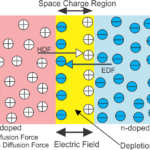
TVS diode works by the avalanche breakdown mechanism. The avalanche breakdown mechanism in TVS (Transient Voltage Suppression) diodes is a fundamental aspect of their protective capabilities. To understand this mechanism, imagine a serene mountainside where a single pebble might dislodge and set off a cascading effect, leading to a full-blown avalanche. Similarly, in the electronic landscape of a TVS diode, when the voltage across the device exceeds its designed breakdown voltage also known as the avalanche voltage the semiconductor material starts to conduct electricity in a controlled manner. At high electric fields, the charge carriers (electrons and holes) within the diode gain enough kinetic energy to free additional charge carriers when they collide with the lattice atoms. This process is called impact ionization. As the electric field increases, more carriers are generated, and the current rapidly multiplies in a chain reaction, akin to the growing momentum of a snow avalanche. This sudden surge of carriers allows the diode to conduct a high current, diverting the excess energy away from sensitive components, while keeping the voltage across it clamped to a safe level. Importantly, the avalanche breakdown mechanism is reversible once the transient voltage subsides, the TVS diode returns to its non-conductive state, ready to stand guard against the next transient event. The ability of a TVS diode to quickly transition from a high-impedance (non conductive) state to a low-impedance (conductive) state during an avalanche event is what makes it an indispensable component for protecting electronic circuits. It’s like having a rapid response team that instantly springs into action to protect against voltage intruders, then quietly steps back after the threat has passed.

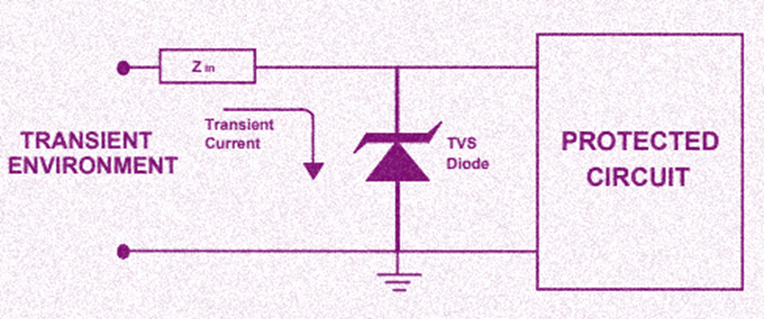
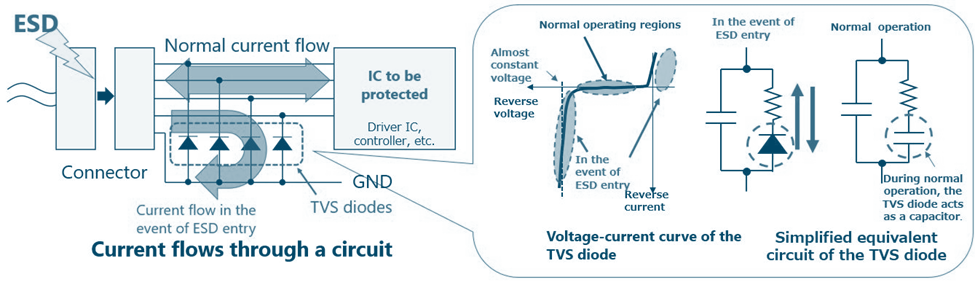
When a TVS diode is used to protect an integrated circuit (IC) from Electrostatic Discharge (ESD) events originating from external supply lines or input sources, it is typically placed in parallel with the power lines of the IC. This strategic positioning allows the TVS diode to act as a vigilant gatekeeper, monitoring the voltage levels and standing by to react instantaneously should ESD strike. Here’s how the protection process unfolds:
Normal Operation:
During regular operation, the voltage on the power lines remains within a safe range, and the TVS diode remains in a passive, high-impedance state. It’s like a watchful protector that doesn’t interfere with the daily workings of the kingdom it guards. ESD Event Occurs: If an ESD event occurs, it manifests as a sudden, high-voltage spike that travels along the supply or input lines. This spike is like a treacherous wave threatening to flood the gates of the IC’s castle. Immediate Response: The moment this voltage spike exceeds the breakdown voltage of the TVS diode, it triggers the avalanche breakdown mechanism. Like a trusty shield, the TVS diode rapidly transitions to a low-impedance state, providing a path of least resistance for the incoming surge.
Clamping the Voltage:
By conducting the ESD current, the TVS diode effectively “clamps” the voltage at a level that is tolerable for the IC. This clamping action is akin to the opening of floodgates to divert the deluge away from the vulnerable areas.
Return to Standby:
Once the transient voltage spike is safely diverted and the voltage levels return to normal, the TVS diode automatically resets by transitioning back to its high-impedance state. The ramparts are restored, and the protector resumes its silent watch, ready for the next assault. By placing the TVS diode in parallel with the IC power lines, it ensures that any excessive voltage that could potentially damage the IC is quickly and efficiently neutralized. This protection is crucial since ESD can be quite destructive, capable of degrading or even destroying the sensitive electronic pathways within an IC. Thus, the TVS diode serves as an essential shield, preserving the integrity of the IC against the unpredictable and potentially damaging forces of ESD from external sources.
Bipolar and unipolar configuration
A TVS diode is a crucial component in protecting electronic circuits from voltage spikes or transients. There are two primary configurations: bipolar and unipolar. In a unipolar configuration, the TVS diode is designed to protect against either positive or negative voltage spikes but not both. Typically, a single TVS diode in this configuration clamps the voltage to a specified level beyond its breakdown voltage in one direction, returning to a non-conductive state once the transient is gone. On the other hand, a bipolar TVS diode can protect against transients in both directions. It is essentially two unipolar diodes connected in series but oriented in opposite directions. This means that a bipolar TVS diode can clamp both positive and negative voltage spikes, making it suitable for applications where bidirectional protection is necessary. Understanding the difference between these configurations helps in selecting the appropriate TVS diode based on the specific requirements of the circuit being protected.

Series and Parallel Arrangements
TVS (Transient Voltage Suppression) diodes can be deployed in various configurations to optimize circuit protection. Understanding the effects of using TVS diodes in series and parallel configurations can help in achieving the desired protection levels for specific applications. Series Configuration When TVS diodes are placed in series, the overall breakdown voltage of the configuration increases. This is because the breakdown voltage of the series array is the sum of the individual breakdown voltages of each diode. For example, if you place two TVS diodes with a breakdown voltage of 30V each in series, the combined breakdown voltage will be 60V. This configuration is useful when you need a higher breakdown voltage than what a single TVS diode can provide. However, it’s important to note that the clamping voltage will also be higher, which may not be suitable for applications requiring lower clamping levels. Additionally, the response time of the series configuration may be slightly longer due to the additive effect of the diodes’ individual response times. Series configurations are less common and are typically used in applications where the operating voltage is significantly higher than standard TVS diode ratings. Parallel Configuration In a parallel configuration, TVS diodes share the transient current, effectively increasing the overall current-handling capability of the protection circuit. When diodes are connected in parallel, each diode will clamp at its breakdown voltage, but the current is distributed among them. This configuration is beneficial when a single TVS diode cannot handle the peak pulse current of a transient event. For example, if you have two TVS diodes rated at 5A each connected in parallel, the combined configuration can handle up to 10A of peak pulse current. However, ensuring that the diodes are well-matched in terms of their breakdown and clamping voltages is crucial, as any mismatch can lead to uneven current distribution, potentially overloading one of the diodes. Parallel configurations are commonly used in high-power applications where significant amounts of transient energy need to be absorbed. Purpose and Applications The primary purpose of using TVS diodes in series or parallel configurations is to tailor the protection circuit to specific requirements that a single diode cannot meet. Series configurations are mainly employed to achieve higher breakdown voltages, suitable for high-voltage protection scenarios. On the other hand, parallel configurations are used to enhance the current-handling capacity, making them ideal for applications exposed to high-energy transients, such as power supply lines, industrial systems, and telecommunication equipment. By carefully selecting and configuring TVS diodes in series or parallel arrangements, designers can achieve the necessary protection levels tailored to their specific application needs, ensuring robust and reliable operation of electronic circuits.
Electrical Characteristics of TVS Diodes
TVS (Transient Voltage Suppression) diodes are designed to protect electronic circuits from voltage spikes. Understanding their electrical characteristics is crucial for selecting the appropriate TVS diode for a specific application. Below are the key electrical characteristics of TVS diodes:
Peak Pulse Power (PPP)
The Peak Pulse Power (PPP) rating indicates the maximum power a TVS diode can absorb in a given time during a transient event. It is typically measured in watts (W) and is defined by a specific waveform, such as an 8/20 µs waveform. A higher PPP rating means the diode can handle more substantial transients without being damaged, making it vital for robust protection.
Breakdown Voltage and Clamping Voltage
The Breakdown Voltage is the voltage at which the TVS diode begins to conduct and clamp the transient. This voltage is specified as a minimum and maximum range. The Clamping Voltage, on the other hand, is the voltage level at which the diode limits the transient. It is always higher than the breakdown voltage and is the actual voltage to which the transient spike is reduced. Proper selection ensures the clamping voltage is within safe limits for the protected circuitry.
Reverse Standoff Voltage
The Reverse Standoff Voltage, also known as the working voltage, is the maximum continuous voltage that can be applied to the TVS diode without causing it to conduct. This parameter is crucial as it ensures that the diode remains in a non-conductive state during normal operation, preventing unnecessary power dissipation and maintaining circuit efficiency.
Peak Pulse Current (Ipp)
The Peak Pulse Current (Ipp) rating defines the maximum current the TVS diode can withstand during a specified transient event. Typically measured in amperes (A), this rating is crucial for ensuring that the diode can handle the intensity of the transient current without failing. It is usually specified in conjunction with the PPP rating and the waveform used for testing.
Response Time
Response time refers to the time it takes for the TVS diode to respond to a transient voltage. TVS diodes are known for their fast response times, usually in the range of picoseconds to nanoseconds. This rapid response is essential to protect sensitive electronic components from transient events effectively.
Capacitance and Leakage Current
Capacitance in a TVS diode impacts the performance of high-speed data lines, so it is vital to choose a low-capacitance diode for such applications. Capacitance is typically measured in picofarads (pF). Leakage Current is the small amount of current that flows through the TVS diode when it is in a non-conductive state. It is usually very low, measured in microamperes (µA), and should be minimized to reduce power loss and prevent the diode from affecting the circuit’s normal operation.
Understanding these electrical characteristics helps in selecting the right TVS diode, ensuring that the protected circuit is both safe from transients and operates efficiently under normal conditions.
Selection Criteria for TVS Diodes
Selecting the appropriate TVS diode for your application involves several critical considerations to ensure effective protection and optimal performance. Below are the key factors you need to take into account:
Determining the Appropriate Parameters
The first step in selecting a TVS diode is to determine the electrical parameters specific to your application. This includes identifying the maximum voltage the protected circuit will encounter under normal operating conditions, often referred to as the Reverse Standoff Voltage. Additionally, you need to consider the Breakdown Voltage and Clamping Voltage, ensuring they align with the circuit’s voltage tolerance levels. Peak Pulse Power (PPP) and Peak Pulse Current (Ipp) ratings should also be determined based on the potential transient energy and current that the circuit may experience. By accurately defining these parameters, you ensure that the TVS diode will provide effective protection without introducing unnecessary restrictions or inefficiencies.
Understanding Device Ratings
Once you have determined the appropriate parameters, it’s crucial to understand the ratings of various TVS diodes to match them to your requirements. This involves examining the datasheets for specific ratings, such as Breakdown Voltage, Clamping Voltage, PPP, and Ipp. Pay particular attention to the waveform used for testing these parameters, as real-world transients can vary significantly. Also, consider the device’s Response Time, especially in high-speed applications, to ensure that the diode can react quickly enough to protect sensitive components. Device Capacitance should be considered for high-speed and high-frequency circuits to avoid signal degradation. Understanding these ratings will help you make an informed decision and select a TVS diode that matches your application’s needs.
Environmental and Operational Considerations
The environmental and operational conditions in which the TVS diode will operate are also crucial for selection. Factors such as operating temperature range, humidity, and potential exposure to harsh environments should be considered. For instance, TVS diodes used in automotive or industrial applications may need to withstand a wider temperature range and more rugged conditions compared to those used in consumer electronics. Additionally, consider the physical mounting type and form factor of the TVS diode, ensuring it fits within the design constraints of your circuit board. Compliance with industry standards and certifications may also be necessary, depending on the application. These considerations ensure that the TVS diode not only protects your circuit effectively but also remains reliable over its operational life.
By carefully considering these selection criteria, you can choose a TVS diode that provides robust protection, fits seamlessly into your design, and operates reliably under the expected environmental conditions.
TVS Diode Types and Technologies
The selection of TVS (Transient Voltage Suppression) diodes involves understanding the various types and technologies available, each with unique characteristics suited to different applications. Below are some of the common types of TVS diodes and technologies used for transient voltage suppression.
Silicon Avalanche Diodes
Silicon Avalanche Diodes are the most common type of TVS diodes and are highly effective in clamping voltage spikes. They operate by utilizing the avalanche breakdown mechanism, where the diode becomes conductive when the voltage exceeds its breakdown threshold. This rapid clamping action protects sensitive components from transients. Silicon Avalanche Diodes are known for their fast response times, low capacitance, and high clamping accuracy, making them ideal for high-speed communication interfaces and sensitive electronic circuits.
Transil Diodes, Transorbs, Thyrectors
Transil Diodes, Transorbs, and Thyrectors are essentially trade names for TVS diodes produced by different manufacturers. They all function similarly to Silicon Avalanche Diodes, providing fast response times and effective clamping of transient voltages. These diodes are designed to absorb high-energy pulses, protecting electronic circuits from voltage spikes caused by lightning, electrostatic discharge (ESD), and other transient events. The main difference lies in the branding and sometimes slight variations in performance characteristics like breakdown voltage range and clamping efficiency.
Thyristor Surge Suppressors
Thyristor Surge Suppressors, also known as SIDACtors, are designed for higher power applications. Unlike TVS diodes, these devices utilize a thyristor structure, which allows them to handle larger currents and higher power transients. Thyristor Surge Suppressors remain in a high-impedance state during normal operation. When a transient occurs and the voltage exceeds the breakover threshold, the device switches to a low-impedance state, clamping the voltage and absorbing the surge current. These are particularly useful in telecommunications and power supply protection where higher energy transients may be encountered.
Multi-Layer Varistors (MLVs)
Multi-Layer Varistors (MLVs) are another type of transient voltage suppression device that uses zinc oxide as the primary material. MLVs are composed of multiple layers of varistor material, offering compact size and superior performance for ESD protection. These devices provide bidirectional clamping and are known for their high energy absorption capacity and fast response time. MLVs are particularly suitable for protecting sensitive components in consumer electronics, automotive applications, and high-density PCB layouts where space is a constraint.
Comparison of Different TVS Technologies
Each TVS technology has its advantages and specific application areas. Silicon Avalanche Diodes are preferred for their fast response time and low capacitance, making them suitable for high-speed data lines. Transils, Transorbs, and Thyrectors offer similar performance but may differ slightly in terms of breakdown voltage and clamping efficiency. Thyristor Surge Suppressors excel in high-power applications due to their ability to handle larger currents and higher power transients. Finally, Multi-Layer Varistors provide compact, bidirectional clamping and are ideal for space-constrained applications.
Understanding these different types of TVS diodes and technologies allows for more informed decisions when choosing a TVS device, ensuring the best fit for your circuit’s protection needs.